18 Oct 2026
Tracing the Evolution of Underground Storage Techniques in Polish Households Through Archival Records
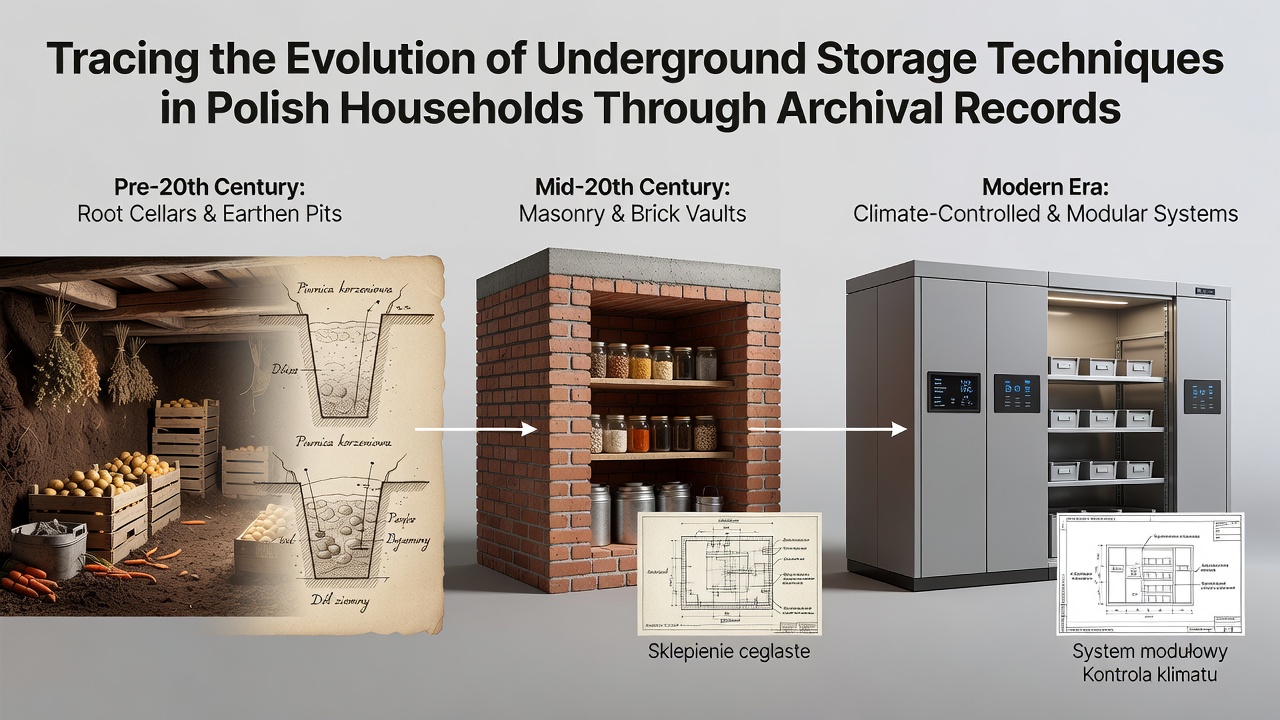
Archival records from Polish households reveal a steady progression in underground storage methods that spans several centuries, with documents from manorial ledgers, church inventories, and municipal registers providing the primary evidence base. Those records show how early techniques relied on simple earthen pits lined with straw and clay, a practice documented in 16th-century farm accounts from the Greater Poland region where grain and root vegetables required protection from frost and rodents.
Medieval Foundations in Household Inventories
Researchers examining surviving monastic and noble household ledgers note that underground chambers first appear consistently in the 14th and 15th centuries, often described as "piwnice" with basic timber supports and drainage channels carved into bedrock. These early structures stored salted meats, cheeses, and fermented beverages, and the same archives indicate that ventilation holes were added by the late 1500s after repeated crop failures made temperature control essential. Court records from the Polish-Lithuanian Commonwealth further document disputes over shared storage spaces, illustrating how households adapted communal cellars to individual needs.
Nineteenth-Century Adaptations Under Partition
During the partitions of Poland, archival material from Prussian, Austrian, and Russian administrative offices tracks significant changes in storage construction, with engineers introducing brick vaulting and metal grates to comply with new sanitation regulations. Household diaries from the 1840s describe the addition of wooden shelving systems that elevated produce above damp floors, while estate inventories list the increasing use of glass jars for preserves. Data from regional tax assessments reveal that larger cellars became taxable assets, prompting families to expand existing pits rather than build new ones.
Twentieth-Century Shifts Documented in Wartime and Postwar Archives
World War II occupation records and postwar reconstruction reports illustrate how underground storage adapted to scarcity, with many households reinforcing walls using salvaged concrete and adding electric lighting once power grids stabilized in the 1950s. Archival photographs from the 1960s show the transition from natural ice blocks to mechanical refrigeration units installed in deeper chambers, a change tracked through cooperative farm ledgers that recorded reduced spoilage rates. Those documents also note the gradual decline of traditional root cellars in urban areas as apartment blocks replaced single-family homes.
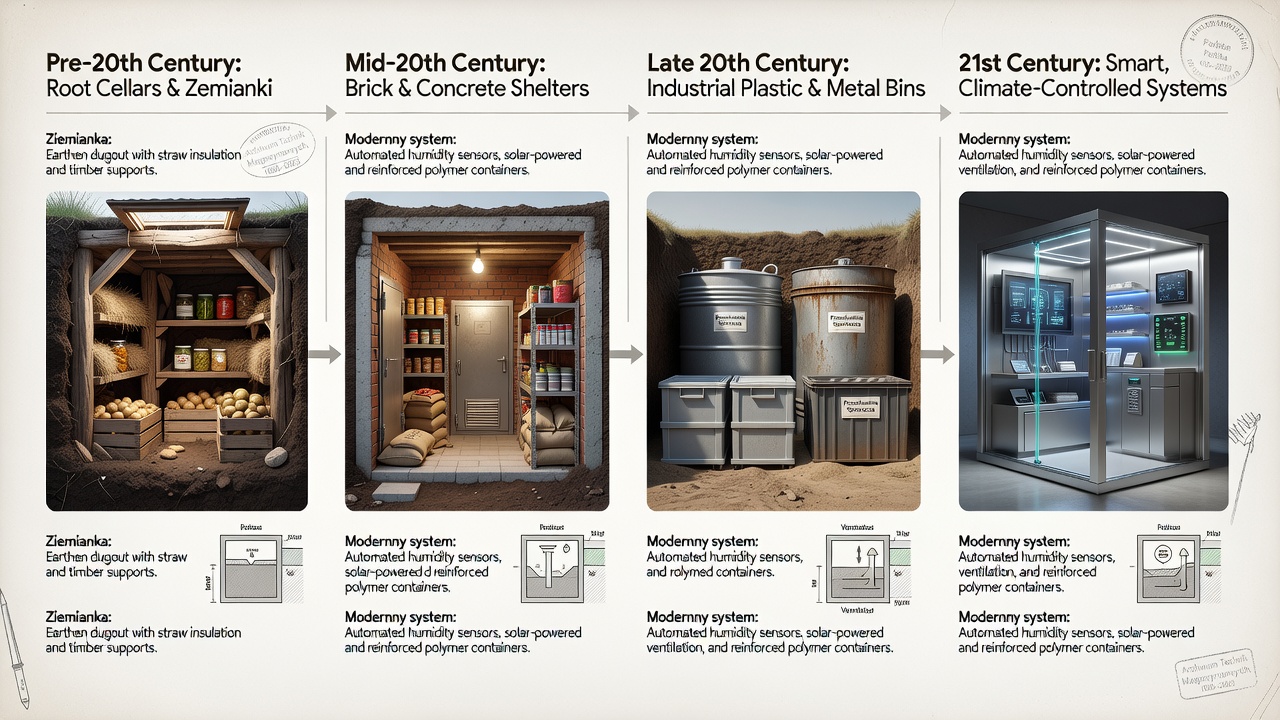
What's interesting is how late-20th-century municipal archives capture a revival of older techniques during economic transitions, when families returned to clay-lined pits for storing potatoes and apples after supply chains faltered. European Union heritage studies have catalogued these patterns across former Eastern Bloc countries, showing parallel developments in ventilation and humidity control that improved long-term food security.
Recent Archival Discoveries and October 2026 Initiatives
Digital indexing projects launched by the Polish National Archives have made thousands of previously inaccessible household inventories searchable, allowing researchers to map storage technique changes by decade. In October 2026 the National Archives in Warsaw will host an exhibition of digitized cellar plans drawn between 1790 and 1950, drawing on newly catalogued materials from private estates in Lesser Poland. These records demonstrate the consistent use of limestone slabs for flooring and the incremental addition of drainage systems that reduced mold growth, facts corroborated by cross-referenced weather logs and agricultural reports.
Academic papers from institutions in Germany and Canada have analyzed similar archival sets, confirming that Polish households often integrated local geological conditions into storage design, such as using natural limestone fissures for temperature stability. One study from Jagiellonian University examined over 400 estate documents and found that ventilation shaft placement correlated strongly with prevailing wind patterns recorded in 19th-century meteorological journals.
Conclusion
Archival evidence therefore traces a continuous line from simple earthen pits to engineered chambers that balanced temperature, humidity, and accessibility across changing political and economic conditions. The October 2026 exhibition will provide further public access to these primary sources, enabling continued analysis of how Polish households refined underground storage through centuries of adaptation documented in official and private records.